Get Involved: Building Code Reform and Advocacy
In recent years, there has been growing attention to the barriers that existing building codes in the United States pose to goals of building more housing, in more places, for all incomes and household types. In Washington state, we’ve worked to support both the passage of building code reform bills and the implementation of state building code updates. Below is a little review of some of the building code work and wins that have happened over the last 6 months, and a preview of how you can help upcoming building code advocacy efforts.
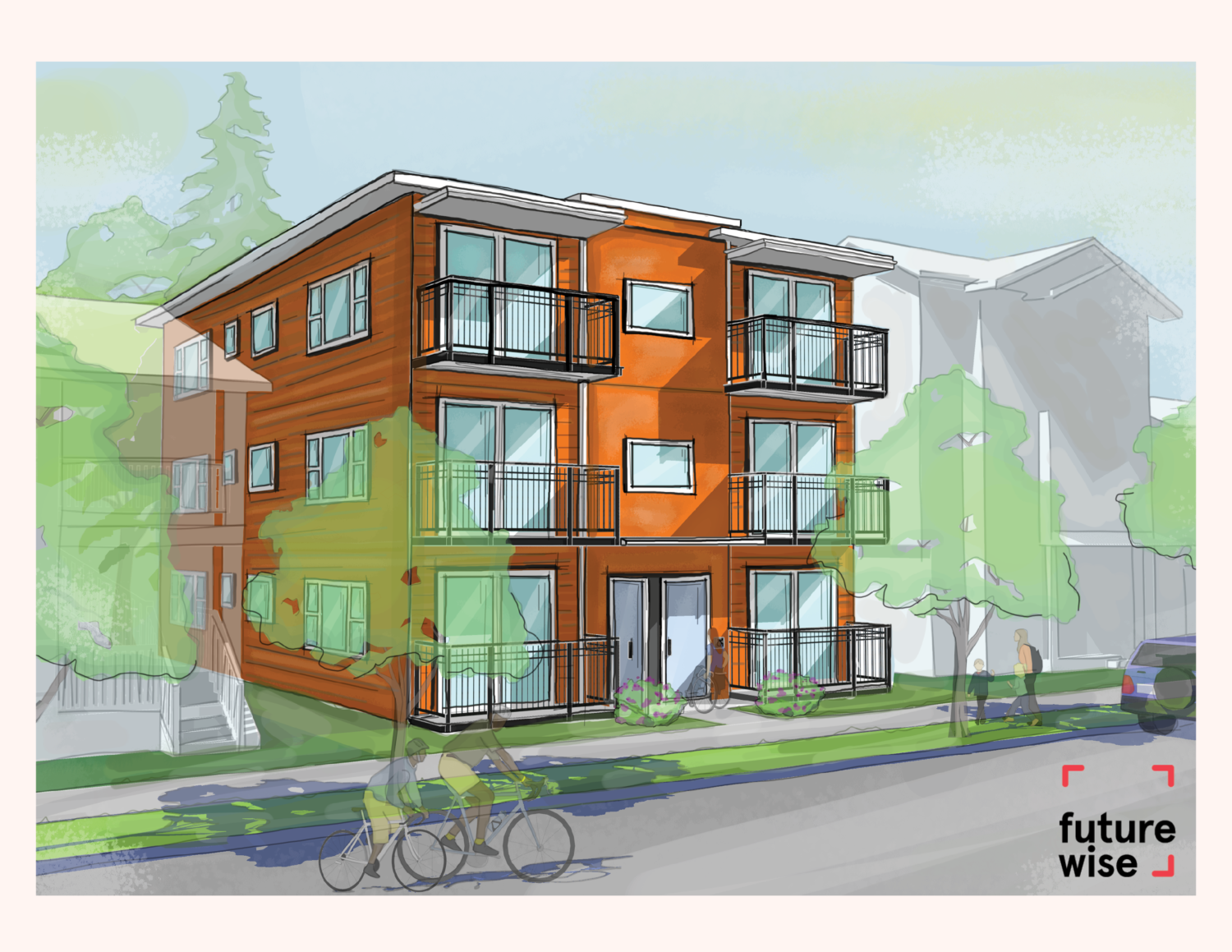
Building Code Reform for More Stacked Flats
In January, we invited Markus Johnson, an urban planner from MAKERS Architecture and Urban Design, to talk through the importance of building code changes that could make it easier to build multiplexes and stacked flats (3-6 homes). During that roundtable discussion, we covered how residential codes, which govern the construction of single-family homes, duplexes, and townhomes, have less demanding requirements than building codes, which govern the construction of multifamily buildings with three or more homes.
This means, without the changes currently working through the State Building Code Council (SBCC) process (more on this later), stacked flats will continue to be significantly more expensive to build than similar sized single-family homes, duplexes, and townhomes.
Our excitement for more stacked flats comes from stacked flats being a type of housing that leaves space for taller trees, provides more opportunities for single-floor accessible homes, and provides more opportunities for larger multifamily homes.
Passage of Scissor Stair Bill
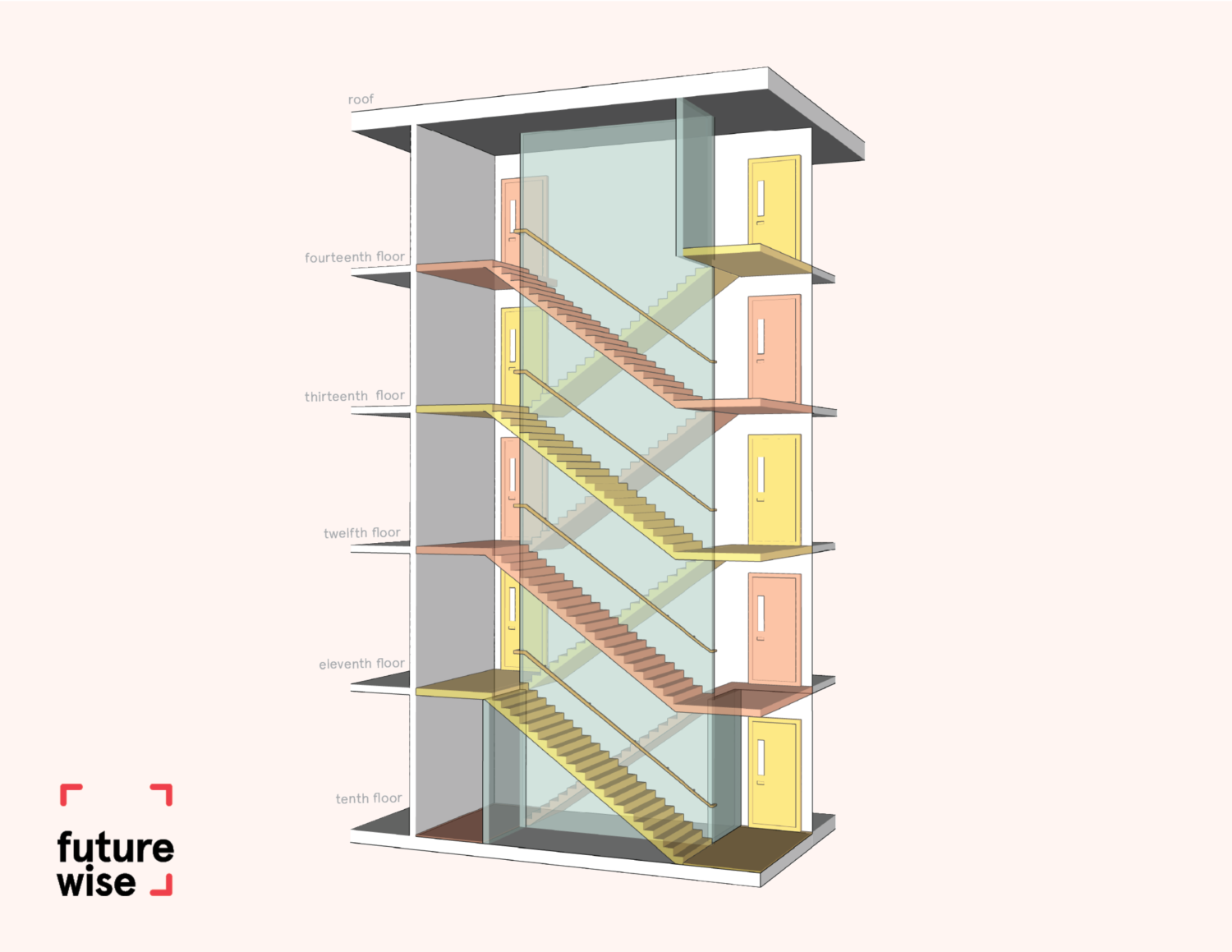
Scissor stairs consist of two interlocking stairways with two separate exits on each floor, enclosed and separated by fire-resistance-rated walls. The stairwells in a scissor stair never cross or intermingle with one another, as the fire-resistance-rated wall ensures that if one stairway is compromised with smoke or fire, the other can still be safely used for egress. Scissor stairs give builders more flexibility to produce higher quality and less expensive homes, and they will primarily be used in midrise and highrise buildings.
House Bill 2228 directs the State Building Code Council to convene a technical advisory group to recommend amendments to the state building code that would allow scissor stairs to count toward the minimum two stairway requirement for certain multifamily residential buildings. Implementation of such updates are expected to finish in 2030.
Passage of Smaller Elevators Bill
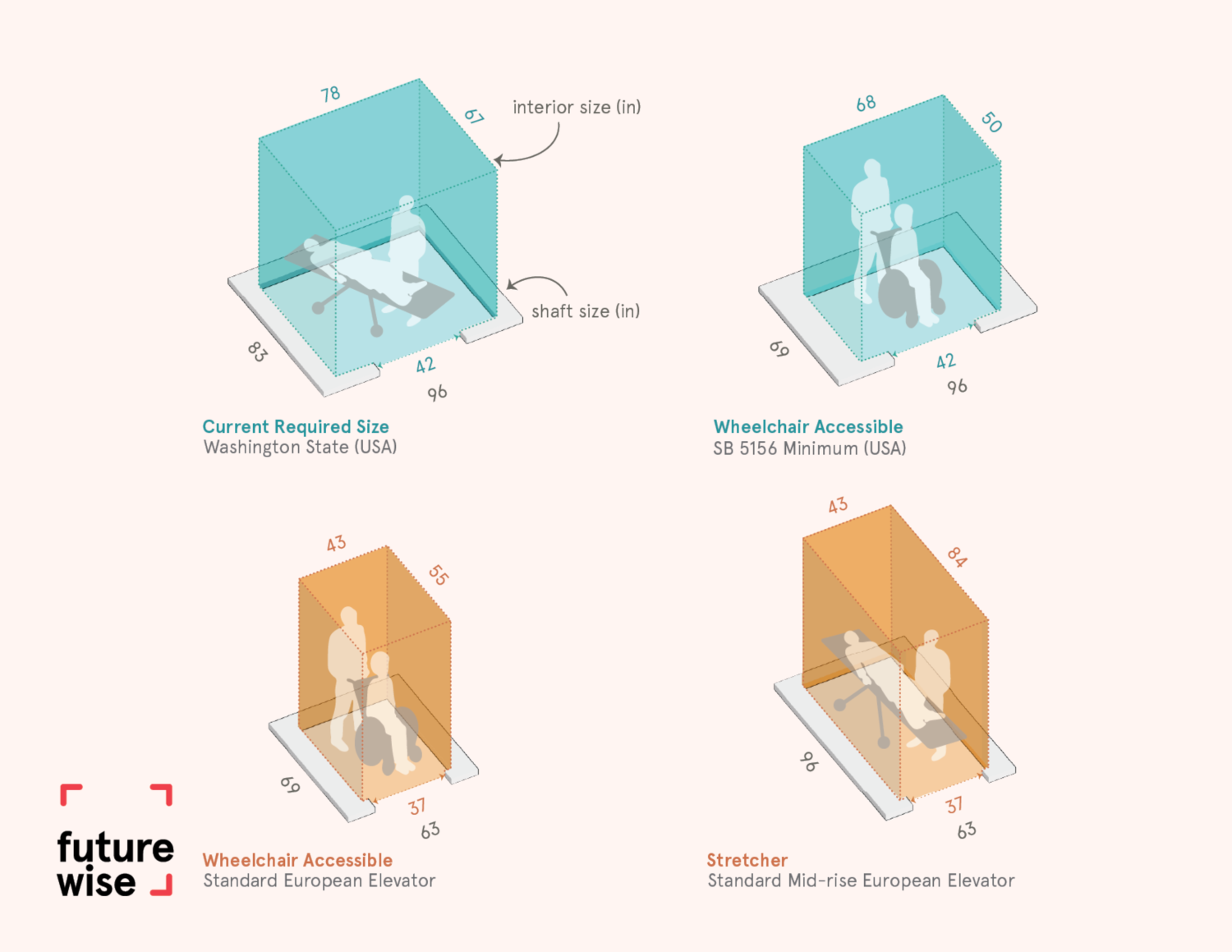
The United States has the fewest elevators per capita of any other high-income country, with three elevators per 1,000 people. Other countries like Greece have 41 elevators per 1,000 people, Switzerland has 27 elevators per 1,000 people, and South Korea has 15 elevators per 1,000 people. The small number of residential elevators is caused by codes and regulations that force elevator cars in the United States to be at least twice the size of elevator cars in Western Europe, which leads to installation of new elevators costing at least three times as much as it cost in Western Europe and East Asia.
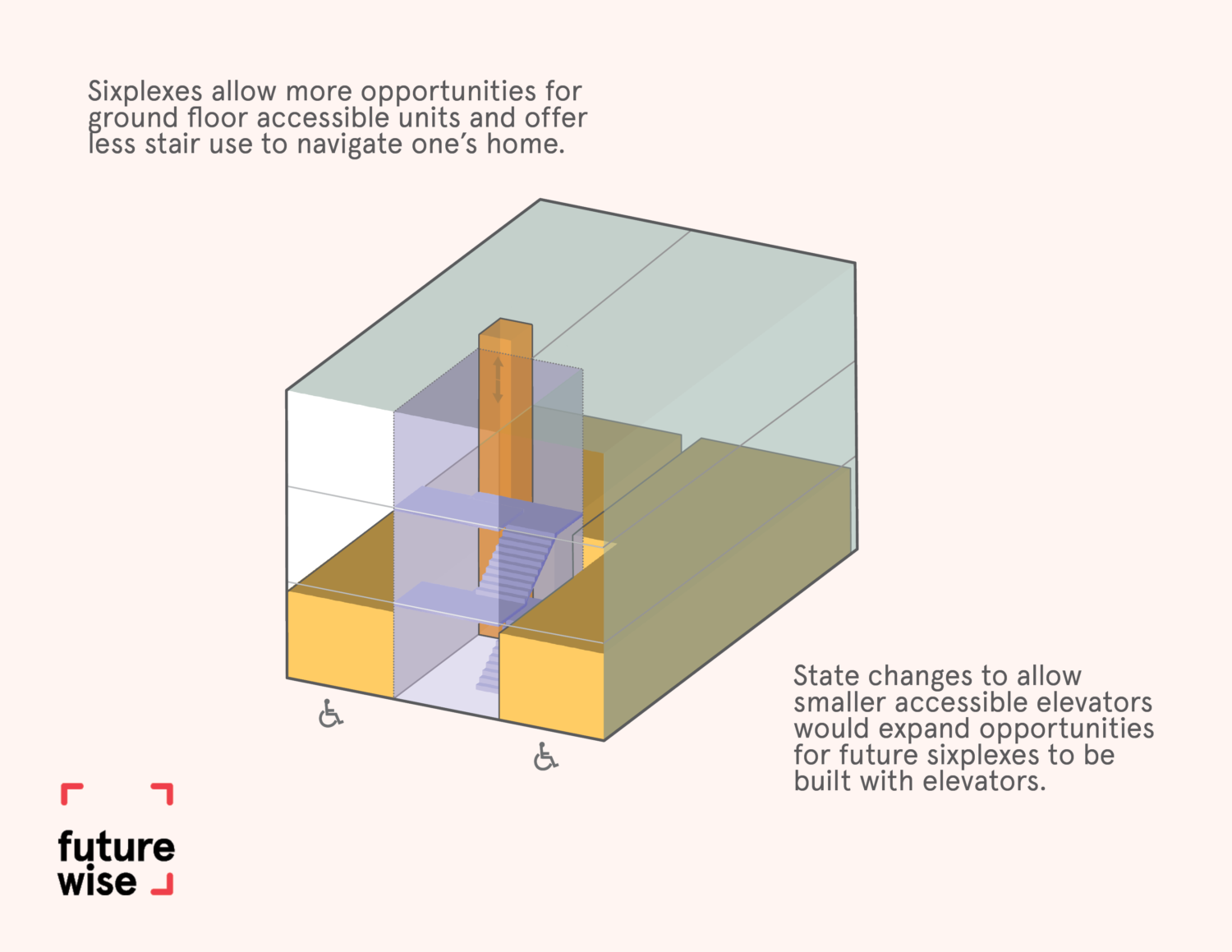
Stacked flat buildings of two to four stories and three to twelve homes commonly have elevators in Western Europe. In the US, the cost of elevator installation means developers only add elevators in larger developments or they avoid elevators all together by building townhomes or walkup buildings.
Allowing smaller elevators will help lower the cost of elevator installation and enable more multifamily buildings to be built with elevators. More residential elevators means more accessible homes and more housing options for a wider diversity of households.
Senate Bill 5156 directs the State Building Code Council to convene a technical advisory group to recommend amendments to the state building code that would allow smaller elevators in smaller developments. Implementation of such updates are expected to finish in 2030.
State Building Code Council and Related Advocacy
The State Building Code Council (SBCC) was created in 1974 to advise the Legislature on building code issues and create the state building codes. The goal of these codes are to create the framework for safe, healthy, accessible, and energy-efficient buildings. These codes can be things from safety requirements, like what type of sprinklers buildings need to have, to energy efficiency like incentivizing heat pumps.
The SBCC is made up of 15 members that are appointed by the Governor and serve a 3-year term. The members represent different sectors and stakeholders, from construction and the trades to fire safety, elected officials, and more.
The SBCC follows a three-year cycle of updating codes based on national and state-level guidelines. During the update cycle, technical advisory groups (TAGs) are created to do a deep dive into proposed updates or amendments. TAGs include experts in the design and construction industries and state and local enforcement officials.
Right now, we are near the end of the 2024 Code Adoption Cycle. TAGs have been meeting for over a year and have compiled their recommendations. There’s a public comment period from May 6 through June 12, where the council will consider public responses, revise the codes if deemed necessary, and then formally approve the codes at the end of the summer. Codes will then be implemented the following spring.
Included in this update are recommendations to move multiplexes into the state residential code, as described above. Overall, we are feeling good about the recommended updates that will treat multiplexes/stacked flats more similarly to single-family homes, duplexes, and townhomes. Also included in the stacked flat code updates is the flexibility to build smaller, more affordable elevators in such stacked flats.
What Can You Do?
You don’t need to know about sprinkler systems to help get more housing built. The most important thing is sharing why YOU care and want to see more stacked flats or multiplexes in your neighborhood (or why you want to live in one).
While the public comment period is happening from May 6 through June 12, our strategy is different from our other campaigns, and we are NOT directing people to testify in person or submit feedback directly to the SBCC at this time. The council may not be accustomed to being on the receiving end of advocacy efforts, and we don’t want to risk our message getting lost in a flood of comments.
Instead, we’re committed to getting your stories shared, and this form is how. Share why you want to live in these homes/why you want them in your neighborhood/why you care and we’ll highlight and submit some to the council in one big document. Once you fill it out, forward to friends and family to share and get as many stories as possible! Check out our storytelling toolkit for tips on crafting a compelling story.
Onward,
Marcella & Markus