Building Code Council Advocacy Update for More Stacked Flats

Imagine living in a Washington where you can afford to live close to your work, school, friends, faith community and more, your kids can afford to live in the neighborhood they grew up in, and you can stay in your home as you age because it’s easy and safe to navigate. At Futurewise, we’ve been working to make that vision a reality. In 2023, we led the way to pass HB 1110 and allow middle housing, home types like duplexes, stacked flats, townhomes, cottage housing, and more, in all neighborhoods in Washington. More middle housing means lowering housing costs, less sprawl and more space for farms and trees, more diverse home options for families of all kinds, more accessible options, and more. However, while this bill was passed and some middle housing is being built, we’re seeing hurdles to building all types of middle housing, especially stacked flats.
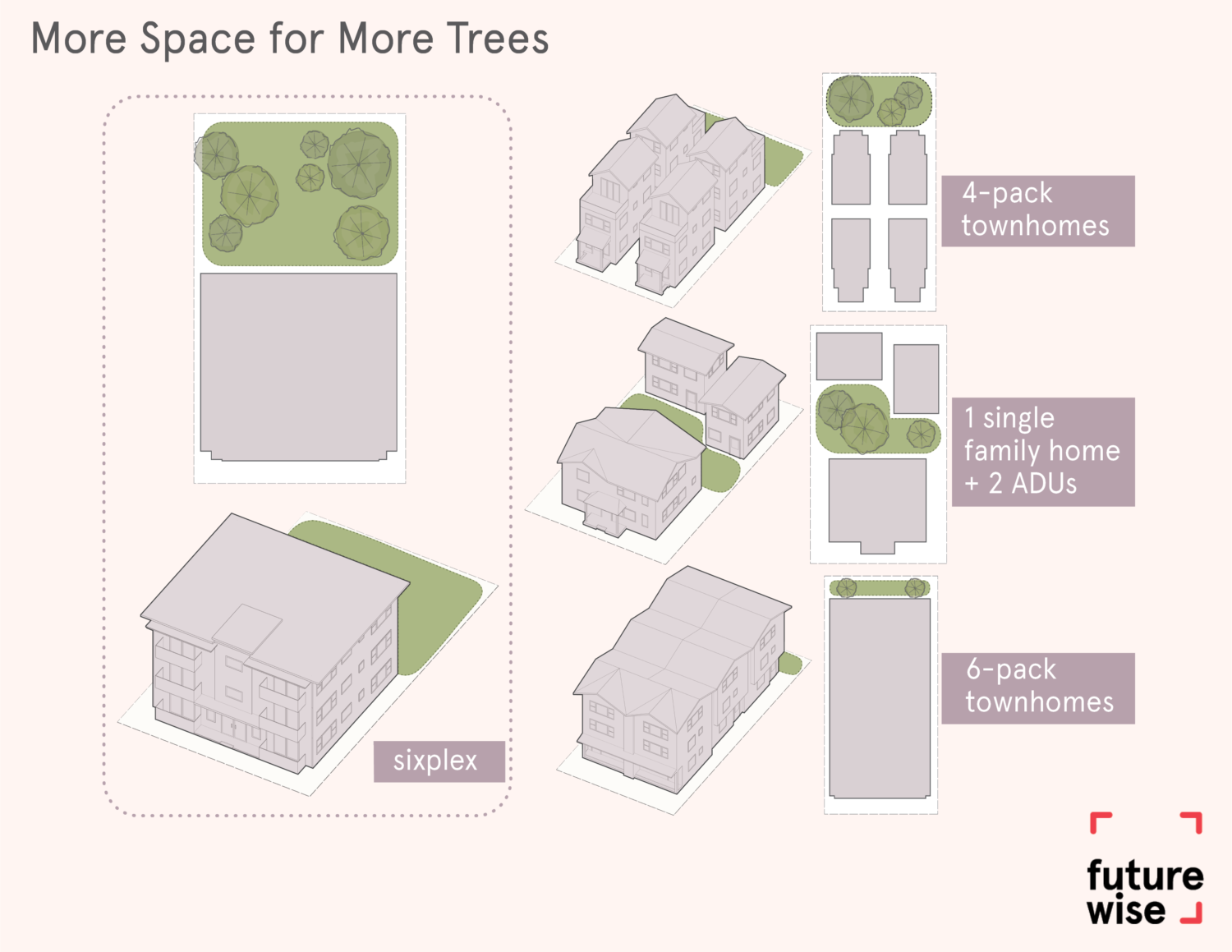
Stacked flats are a great home option because they have accessible units, a smaller footprint that allows for more and larger trees, have less stairs to make it easier to get around, and larger units. If we want to fully enact the vision we had for passing HB 1110, we need to follow up and make sure it is implemented in ways that allow for its greatest potential to be fulfilled. 

Where we’re at

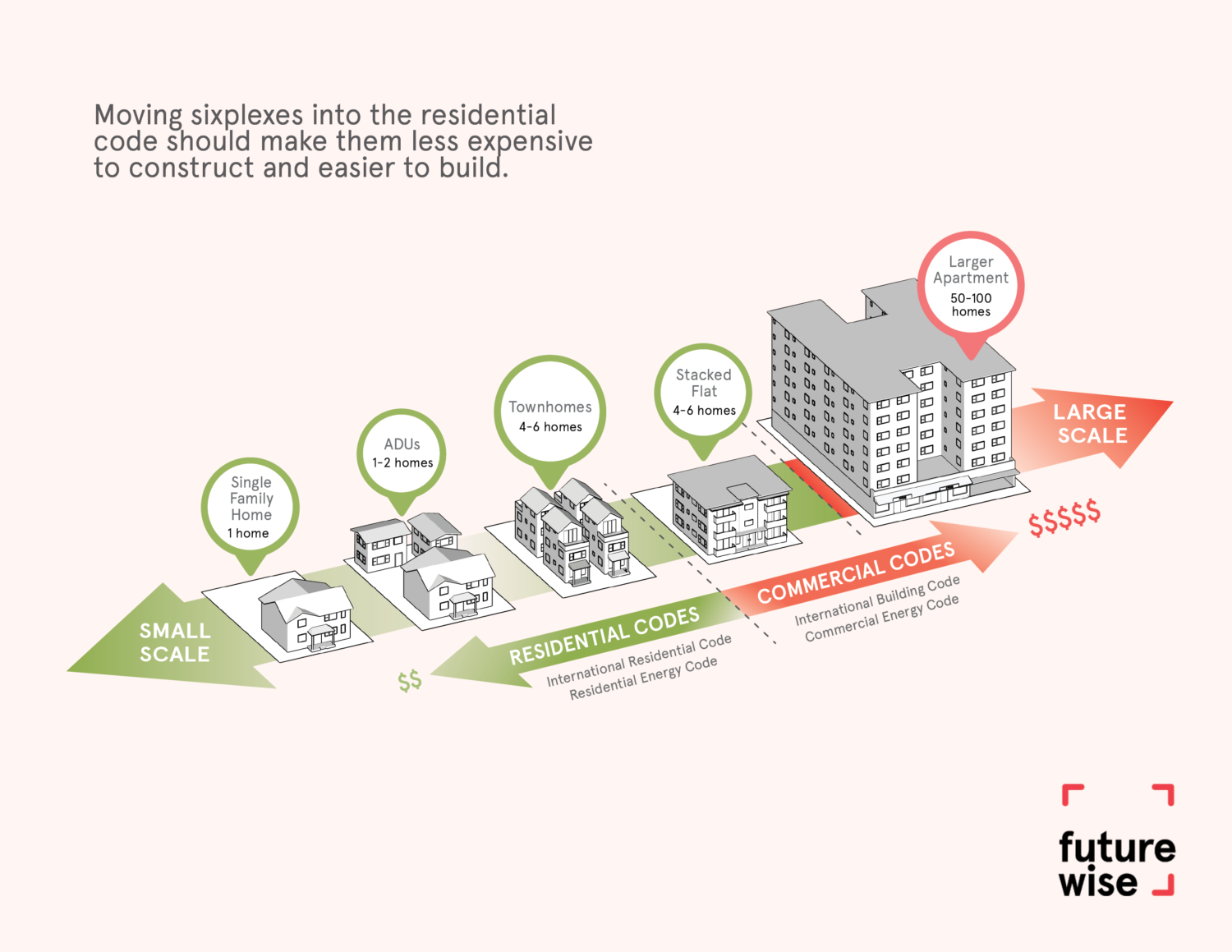
That’s why we’ve been focusing advocacy efforts this summer on the State Building Code Council (SBCC) and want to share the latest update. The SBCC has been considering moving multiplexes and stacked flats to the International Residential Code, which would make it easier to build stacked flats and more housing. We’re excited about this proposal and have been working hard to demonstrate that this is a popular move. You can read the specifics in this previous blog post.
From May through the beginning of June, the SBCC hosted a public comment period to get feedback on their recommendations. Futurewise collected stories from dozens of Washingtonians about why they loved stacked flats and were invested in seeing more being built. While the Council more commonly hears technical feedback, these stories were important in reminding the SBCC why their work is so important and that there are real people across the state counting on them to be housing heroes. Futurewise submitted these stories and testified at the hearing, highlighting some of these impactful narratives and sharing our technical feedback (read more on our stance here!).

What’s next?

The public comment period for this series of updates has ended, and the SBCC has now through August to review the feedback they’ve received and make any changes to the current proposal. Regardless of if anything is changed, the full council will vote on final passage on August 21, and the changes will be implemented the following May. We’ll follow up with any further updates!
Building Code Council Advocacy Update for More Stacked Flats

Imagine living in a Washington where you can afford to live close to your work, school, friends, faith community and more, your kids can afford to live in the neighborhood they grew up in, and you can stay in your home as you age because it’s easy and safe to navigate. At Futurewise, we’ve been working to make that vision a reality. In 2023, we led the way to pass HB 1110 and allow middle housing, home types like duplexes, stacked flats, townhomes, cottage housing, and more, in all neighborhoods in Washington. More middle housing means lowering housing costs, less sprawl and more space for farms and trees, more diverse home options for families of all kinds, more accessible options, and more. However, while this bill was passed and some middle housing is being built, we’re seeing hurdles to building all types of middle housing, especially stacked flats.

Stacked flats are a great home option because they have accessible units, a smaller footprint that allows for more and larger trees, have less stairs to make it easier to get around, and larger units. If we want to fully enact the vision we had for passing HB 1110, we need to follow up and make sure it is implemented in ways that allow for its greatest potential to be fulfilled. 

Where we’re at

That’s why we’ve been focusing advocacy efforts this summer on the State Building Code Council (SBCC) and want to share the latest update. The SBCC has been considering moving multiplexes and stacked flats to the International Residential Code, which would make it easier to build stacked flats and more housing. We’re excited about this proposal and have been working hard to demonstrate that this is a popular move. You can read the specifics in this previous blog post.

From May through the beginning of June, the SBCC hosted a public comment period to get feedback on their recommendations. Futurewise collected stories from dozens of Washingtonians about why they loved stacked flats and were invested in seeing more being built. While the Council more commonly hears technical feedback, these stories were important in reminding the SBCC why their work is so important and that there are real people across the state counting on them to be housing heroes. Futurewise submitted these stories and testified at the hearing, highlighting some of these impactful narratives and sharing our technical feedback (read more on our stance here!).

What’s next?

The public comment period for this series of updates has ended, and the SBCC has now through August to review the feedback they’ve received and make any changes to the current proposal. Regardless of if anything is changed, the full council will vote on final passage on August 21, and the changes will be implemented the following May. We’ll follow up with any further updates!
Building Code Council Advocacy Update for More Stacked Flats

Imagine living in a Washington where you can afford to live close to your work, school, friends, faith community and more, your kids can afford to live in the neighborhood they grew up in, and you can stay in your … Continue reading

Marcella Buser
June 24, 2026

Futurewise works for strong protection for wetlands, waterways, and water quality 

Four drought years in a row has highlighted the need to protect our waterways for drinking water, irrigation, and fish and wildlife habitat. Wetlands clean, store, and slowly infiltrate water into the ground where it seeps into streams, rivers, lakes, … Continue reading

Marcella Buser
June 23, 2026