Futurewise and local partners appeal Whatcom County’s comp plan
By Brooke Frickleton, Deputy Legal Director & Staff Attorney
On September 30, Futurewise – along with our partners at RE Sources and Whatcom Environmental Council – filed an appeal of Whatcom County’s latest comprehensive plan update with the Growth Management Hearings Board.
Earlier this summer, Whatcom County adopted its required ten-year periodic update to its comprehensive plan and local development regulations. Prior to that adoption, Futurewise worked alongside local organizational partners to provide feedback in the form of comment letters on both individual chapters and the final draft. Feedback was made in support of Futurewise’s mission and local priorities like enhancing watershed functions, addressing the impacts of sea level rise, actionable plans for reducing greenhouse gas emissions.
The County’s comprehensive plan serves as the blueprint for how Whatcom County grows. The plan directs where housing, businesses, and open space will go – and how water resources, wildlife habitat, farmland and forests will be protected and enhanced along the way. Under the Growth Management Act (GMA), zoning designations, development regulations, and permit decisions must line up with the plan, so what’s written in it shapes nearly every land use decision for years to come.
The County deserves credit for some real progress in this update. Measured against the 2016 plan, and against new state requirements, the improvements include:
- Better science behind growth decisions. The County used updated FEMA flood maps and its own sea level rise and flooding models to evaluate where growth should go.
- Watershed health. Policies now prioritize projects that maintain or enhance natural watershed functions
- Less planned rural growth. The County lowered its rural population allocation from 10,000 to 9,000 people.
- County’s first climate chapter. This is the County’s first plan with to include new statewide climate planning requirements under HB 1181.
These are meaningful steps, and RE Sources’ blog post covers them in more detail. But the GMA sets specific requirements, and a plan can improve but still not fully comply.
A plan must meet each requirement, and in key places Whatcom County’s updated plan lacks the measurable actions the law demands. The next update is ten years away, and as climate impacts grow over that time, getting things right now is urgent.
Our appeal focuses on three areas where the plan falls short of the GMA:
1. The plan directs urban growth into farmland, floodplains, and rural areas
Unneeded Urban Growth Expansions: The County’s plan allows unnecessary urban growth area expansions and modifications that aren’t necessary to accommodate the County’s planned population and employment growth. These updates allow for potential conversion of agricultural areas to urban uses and extend into floodplains. Sprawling development comes with real costs. It puts farmland, habitat, and even homes at risk, while increasing greenhouse gas emissions.
Affordable housing in the wrong places: The plan leans on rural “limited areas of more intense rural development” (LAMIRDs) to provide affordable housing instead of cities and towns. LAMIRDs generally don’t allow the three- to six-story wood-frame construction affordable housing needs, and most lack the water and sewer systems to support it. Their residents would also have to drive farther for jobs, schools, and recreation, since transit service is limited. That undercuts both housing affordability and climate goals.
2. The plan doesn’t do enough to address climate change.
As our recent Thurston County case showed, climate goals mean little unless the plan commits to concrete steps to achieve them.
In Futurewise v. Thurston County, the Board held that under the new climate change and resiliency element requirements, local climate planning must equitably enhance resiliency to – and avoid or substantially reduce the adverse impacts of – climate change.
In that case, the Board noted that climate element policies that are “vague and aspirational without a clear path to implementation through development regulations and other programs” do not satisfy the GMA’s climate change goals and requirements. The Board further clarified that, although the statute does not require immediate action, local jurisdictions must meet state-adopted emissions-reduction targets by 2050. Each jurisdiction must therefore establish a program with a “demonstrated ability to reduce emissions” and achieve those targets. Under this standard, the Whatcom County plan falls short.
Emissions reductions. The plan doesn’t identify the specific actions the County will take during this planning cycle to reduce overall greenhouse gas emissions. At the same time, it allows growth patterns and higher rural densities that make emissions harder to reduce.
Equitable climate resilience. The plan lacks the required “tangible, measurable action steps” specifically designed to equitably build resilience to climate change impacts. The plan also does not adequately prioritize actions that benefit overburdened communities most impacted by natural hazards due to climate change, as the GMA requires.
3. The plan fails to preserve water resources.
Many rural homes get their water from “permit-exempt” wells, which can be used without a water right permit from the state. State law limits the amount of water these wells draw up per day, and a County’s development regulations must enforce those limits.
Our appeal argues that Whatcom County’s regulations don’t require permit-exempt wells to stay within those limits. Increased rural development is straining surface water and groundwater resources. That matters for salmon and other fish and wildlife, and for the tribal fishers who depend on healthy stream flows and groundwater levels.
Why this matters & what’s next:
How local governments plan for growth has consequences for our climate, our farms, and our water. Homes built far from jobs, schools, and transit mean longer drives and more emissions. Growth that spills onto farmland and floodplains puts food, habitat, and communities at risk.
A climate plan matters only if it changes those patterns, and that’s what the Growth Management Act now asks counties to do.
Now that we have formally filed an appeal of the Whatcom County Comprehensive plan, Futurewise’s legal team will proceed with reviewing all the public records for completeness and drafting their pre-hearing legal arguments due early next year. The oral argument hearing is tentatively scheduled for February 8th, 2027.
We’ll keep you updated as the case moves forward!
Read More
Futurewise and local partners appeal Whatcom County’s comp plan
October 16, 2026
On Sept 30, Futurewise, RE Sources, & Whatcom Environmental Council filed an appeal of Whatcom County’s latest comprehensive plan update. Continue reading
Read more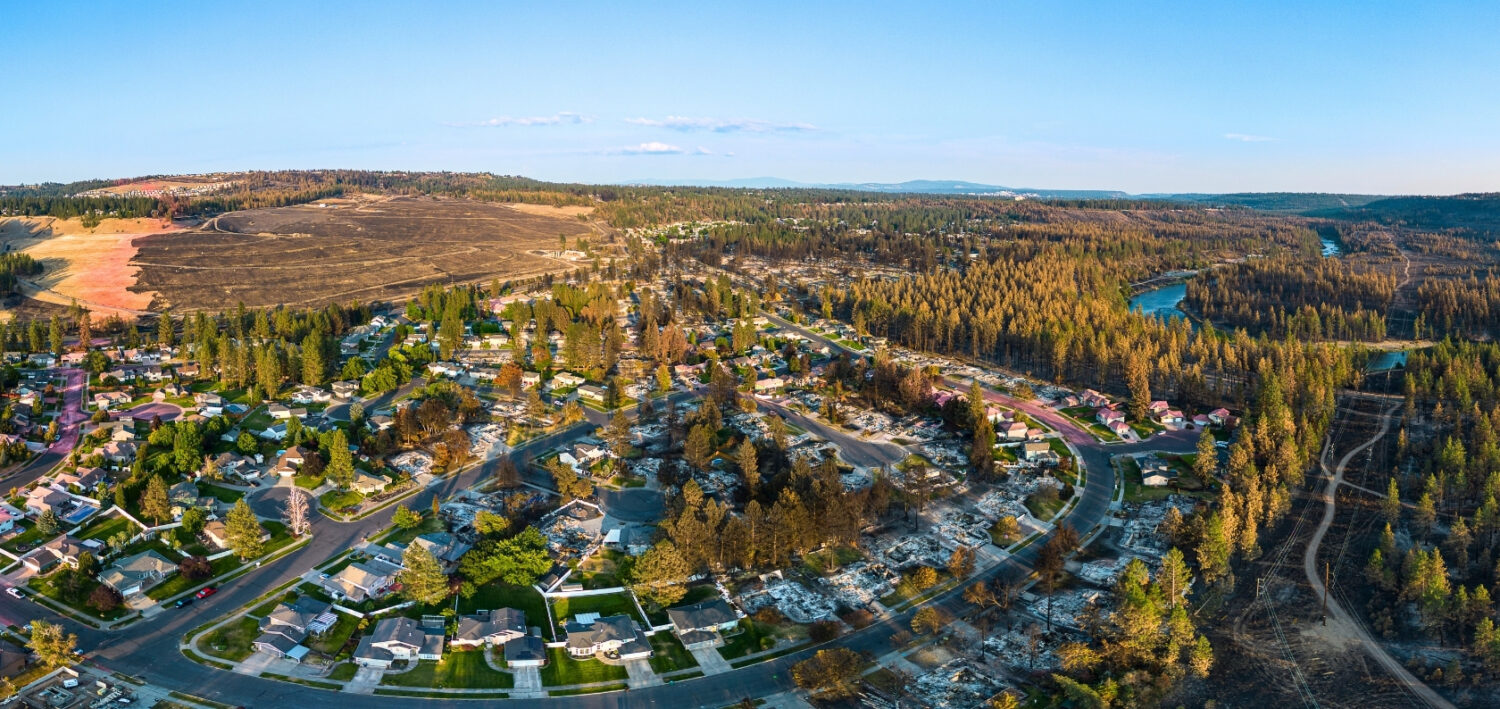
Spokane County’s growth pattern and the August 2026 wildfires
August 31, 2026
In the first week of August 2026, three wildfires — Old Trails, Fairview, and Autumn Lane — tore through the unincorporated fringe of Spokane County, burning more than 11,000 acres, destroying or damaging an estimated 850 to 1,000-plus structures, and forcing nearly 67,000 people to evacuate. Continue reading
Read more
The Board Has Ruled: Aspirational Is Not Enough
August 28, 2026
On August 17, the Growth Management Hearing ruled that Thurston County’s plan does not comply with the GMA: both the greenhouse gas emissions reduction subelement and the climate resiliency subelement failed. This decision will shape climate planning across the state for years to come. Continue reading
Read more